 HIFU Treatment
Non-Surgical Skin Rejuvenation
HIFU Treatment
Non-Surgical Skin Rejuvenation
HIFU Treatment
Non-Surgical Skin Rejuvenation
HIFU Treatment
Non-Surgical Skin Rejuvenation
Non-Surgical Toning, Tightening & Rejuvenation
A calm, clear and comprehensive guide to High Intensity Focused Ultrasound — how it works, what it treats, who it suits and what results to realistically expect.

At some point, you glance in the mirror and something looks just a wee bit off. Could be a softness on the jawline that wasn't there a few years ago. Or your neck skin seems to hang a little lower. There is nothing vastly different in what you're doing differently, but time and gravity have continued to be a thing.
That's where HIFU treatment comes into play.
High Intensity Focused Ultrasound, or HIFU, is a non-invasive and non-surgical cosmetic procedure that relies on ultrasound energy directed at areas of the skin that creams, serums and even some laser treatments simply cannot reach. Rather than cutting, injecting or pulling, HIFU works from the inside out. It applies heat to specific spots underneath the surface of the skin, giving your body an excuse to start its own repair processes. The result is skin that is firmer, tighter and more lifted — without a single incision.
In recent years, HIFU treatment has emerged as one of the most popular non-invasive treatments in the UK. And it's not hard to see why. People want results. They wish to appear revitalised and exude confidence. However, they do not want the risks, recovery time and cost associated with surgical solutions. HIFU sits snugly in that sweet spot between doing nothing and getting surgery.
This page is here to be candid about the intricacies of HIFU treatment. How it works. What it's used for. Who it's best for. What to expect from results. How it compares with other treatments. No vague promises. The exact kind of thorough, no-nonsense information you would want before doing anything to your skin.
So, if you are noticing the first signs of ageing or have been thinking about a non-invasive option for some time, this should provide you with everything to make an informed decision.

Once you explore the science behind a HIFU treatment session, the results start to make sense.
The skin is composed of several layers. First is the layer on top, called the epidermis. Underneath that is the dermis, containing collagen, elastin and connective tissue. Beneath that lies another very thin layer known as the SMAS, or Superficial Muscular Aponeurotic System. This is the same layer that surgeons work with when doing a traditional facelift. It's the architectural anchor that keeps everything together.
The majority of topical skincare products work at the epidermis. Only some laser treatments can penetrate into the dermis. But HIFU treatment goes further. It sends targeted ultrasound energy into the SMAS layer, all while never penetrating the surface of the skin. That's part of what sets it apart from many of the other non-invasive options available today.
The HIFU device emits multiple beams of ultrasound energy. These beams come together at predetermined focal points within your skin to generate concentrated hot spots. These focal points reach temperatures that create something known as thermal coagulation — localised thermal damage at a specific depth.
On sensing these micro-injuries, your body activates its healing response. As part of that response, new collagen and elastin production ramps up. Collagen is a structural protein that gives your skin its firmness. Elastin is what gives it bounce and flexibility. Both become progressively more scarce as we age. In essence, HIFU encourages the body to create more of what it naturally produces less of with age.
This is why HIFU results are not immediately visible. You will feel a bit of tightness right away, but the true changes come in the weeks and months following. This tightness increases as new collagen is formed and existing collagen fibres remodel. The majority of people notice the most improvement between two to six months following treatment. It takes time to build up, but that is a good thing. Gradual results look natural. Nobody wakes up with a brand new face overnight.
Ultrasound is delivered at specific depths, usually between 1.5 and 4.5 millimetres below the surface. Different depths target different layers. At 1.5 millimetres, the energy targets the epidermis and upper dermis. At 3 millimetres, it reaches the mid-to-lower dermis. And at 4.5 millimetres, it triggers the SMAS layer. This multi-depth technique is precisely how HIFU produces overall tightening and lifting across all layers of the skin structure.
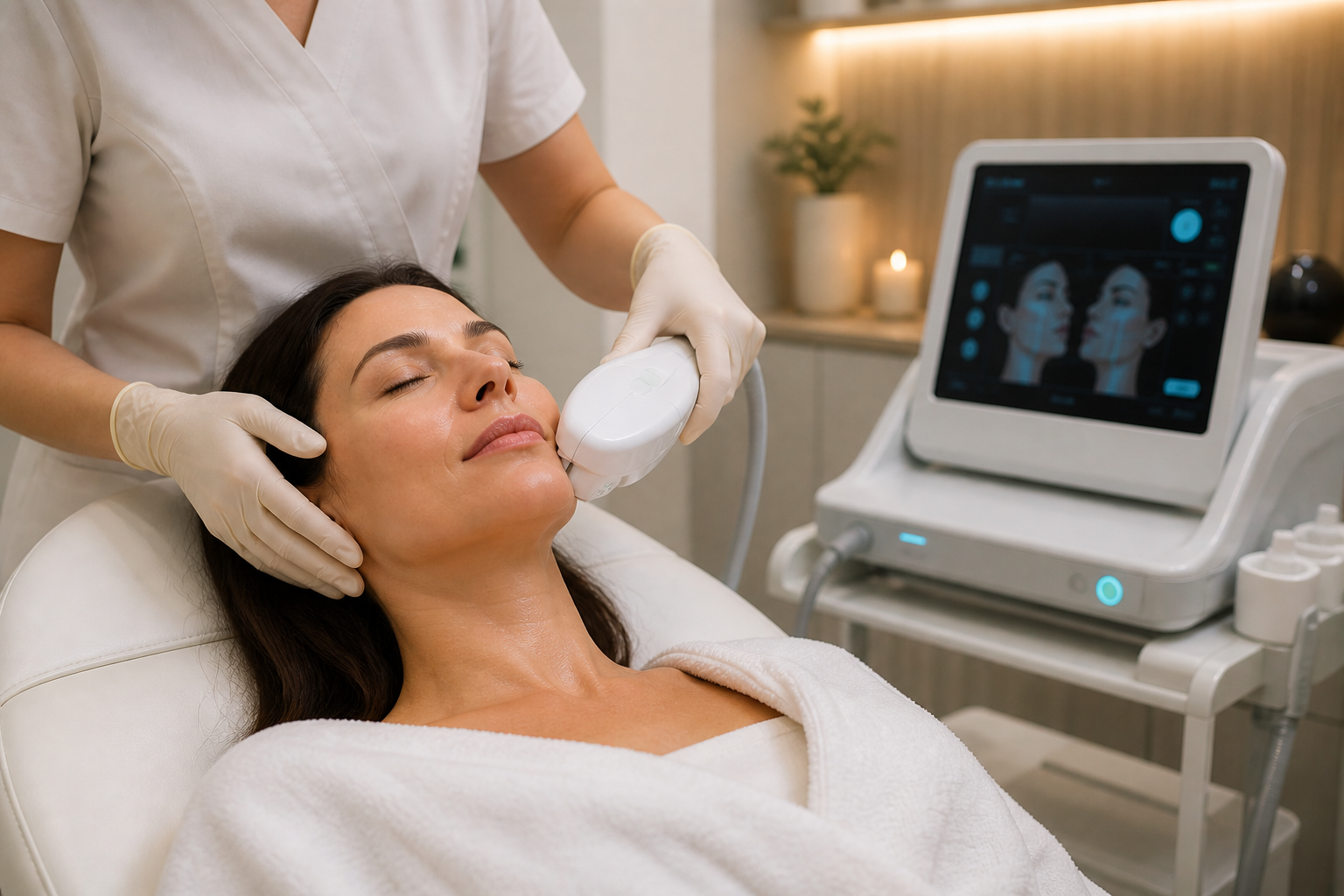
The signs of ageing tend to be first noticed on the face by most people. This is also where HIFU treatment tends to have the most obvious results.
A full face HIFU session addresses numerous areas in a single treatment. Ultrasound energy is delivered systematically over treatment zones, with depth and intensity adjusted by the practitioner based on what each area requires. Since each face ages differently, no two treatments are alike.
The forehead is actually one of the first places where expression lines stop being temporary. After years of frowning, squinting and raising the eyebrows, you are left with horizontal lines along the forehead and vertical furrows between the brows that creams very rarely smooth out. HIFU targets deep below these lines and works to tighten the underlying tissue, softening them from below rather than filling them from the top.
Our eyebrows sag because the skin on the forehead loses elasticity. A millimetre or two of drop can make the eyes seem heavier and more fatigued. HIFU treatment achieves a gentle lift in this area, opening the eye without that frozen or startled look which some other procedures can create.
Fine lines that spread around the corners of the eyes are one of the most common problematic areas with regard to ageing. The area around the eyes has some of the thinnest skin on the face, which is why wear occurs so early. HIFU is used to tighten and firm this delicate area, diminishing the depth and extent of these lines.
Volume loss in the cheeks is a significant part of that drawn, tired expression which so many people associate with ageing. With loss of firmness in the cheek area, the face takes on a more flattened or hollow appearance. HIFU tones and tightens the cheeks, allowing for some of that youthful definition to be regained.
These are the lines that extend from the sides of the nose down to the corners of the mouth. As the mid-face loses volume and structure, these folds become more pronounced. HIFU addresses them by tightening the tissue in the surrounding area.
One of the signatures of lower face ageing is a soft or blurred jawline. HIFU around the jawline is effective at tightening and contouring this area, leaving a sharper, more sculpted appearance. For a lot of individuals, this is the change which makes the largest distinction following treatment.
Submental fat — that little pocket below the chin — is something that can be very difficult to shift. HIFU treatment allows practitioners to address both skin laxity and fat deposits in this area simultaneously. The energy smooths away unwanted fat while tightening the skin above, helping to reduce the appearance of a double chin.
The neck is often the region that betrays your age. The skin there is thinner, contains fewer oil glands, and is often ignored during everyday skincare routines. HIFU treatment aims to treat sagging skin and horizontal lines in the neck area — often referred to as necklace lines — making the neck appear firmer and smoother.
Sun exposure and collagen loss creates crepey skin and fine lines in the chest area, especially for those who have had long-term sun exposure. HIFU treatment can tighten the skin in this region, making it firmer and smoother while also improving the texture.
Each area reacts somewhat differently to treatment. Improvements are most evident in the jawline and neck, since the skin there has quite frequently lost a good deal of structure. Refinements are more subtle at the finer areas, such as the crow's feet and forehead. An effective practitioner will create the treatment plan by shaping it around what matters to you most.

HIFU doesn't just apply to the face. This ultrasound technology translates well into other body areas prone to loose skin and stubborn fat.
Body HIFU works similarly to facial HIFU, though with different calibration for energy delivery. Skin on the body is typically thicker than facial skin, so treatment may penetrate deeper. In certain areas, HIFU targets both skin tightening and subcutaneous fat cell disruption, serving two purposes — firming and contouring.
The back of the upper arms can often be a problem area, particularly for women. This skin sags and expands over time, and exercise alone doesn't always resolve it. HIFU for the upper arms works to tighten the skin, giving a firmer, more toned appearance.
Ageing, fluctuating weight or pregnancy can all lead to laxity of the abdominal skin. HIFU treatment addresses sagging skin on the stomach as well as helping with small areas of excess fat. It is not a substitute for weight loss, but can help sculpt and firm the contour of the midsection.
Skin on the inner and outer thighs tends to lose elasticity with time. HIFU can be a great non-surgical way to tone the thighs, particularly for anyone who has lost weight and now has loose skin in this area.
These regions usually store stubborn fat that is unresponsive to diet and exercise. HIFU can target the fat cells to reduce bulk under the skin while pulling back on the surface skin at the same time.
Skin laxity and the accumulation of fatty tissue in the back, especially at the bra line for women, are notoriously hard to deal with. HIFU treatment offers a non-surgical method to tighten and contour this area.
HIFU can be used to tighten and firm the skin of the buttocks. It is very popular with those looking for non-invasive alternatives to surgical body contouring.
Like facial décolletage treatment, collagen-producing HIFU effectively improves the texture and firmness of the upper chest area.
HIFU technology has also been applied to vaginal tightening. Focused ultrasound energy stimulates collagen in the vaginal tissue to support tone, elasticity and comfort. It is a non-invasive method that has gained popularity for women seeking to address changes occurring after pregnancy and during natural ageing processes.
The key difference between facial HIFU and body HIFU lies in the energy depths and strength required. Higher energy levels are needed for body treatments as the skin is thicker and needs to penetrate deeper layers of tissue. Sessions for body areas tend to be a little longer than facial sessions, but are still generally between 30 and 90 minutes depending on the size of the treatment area.
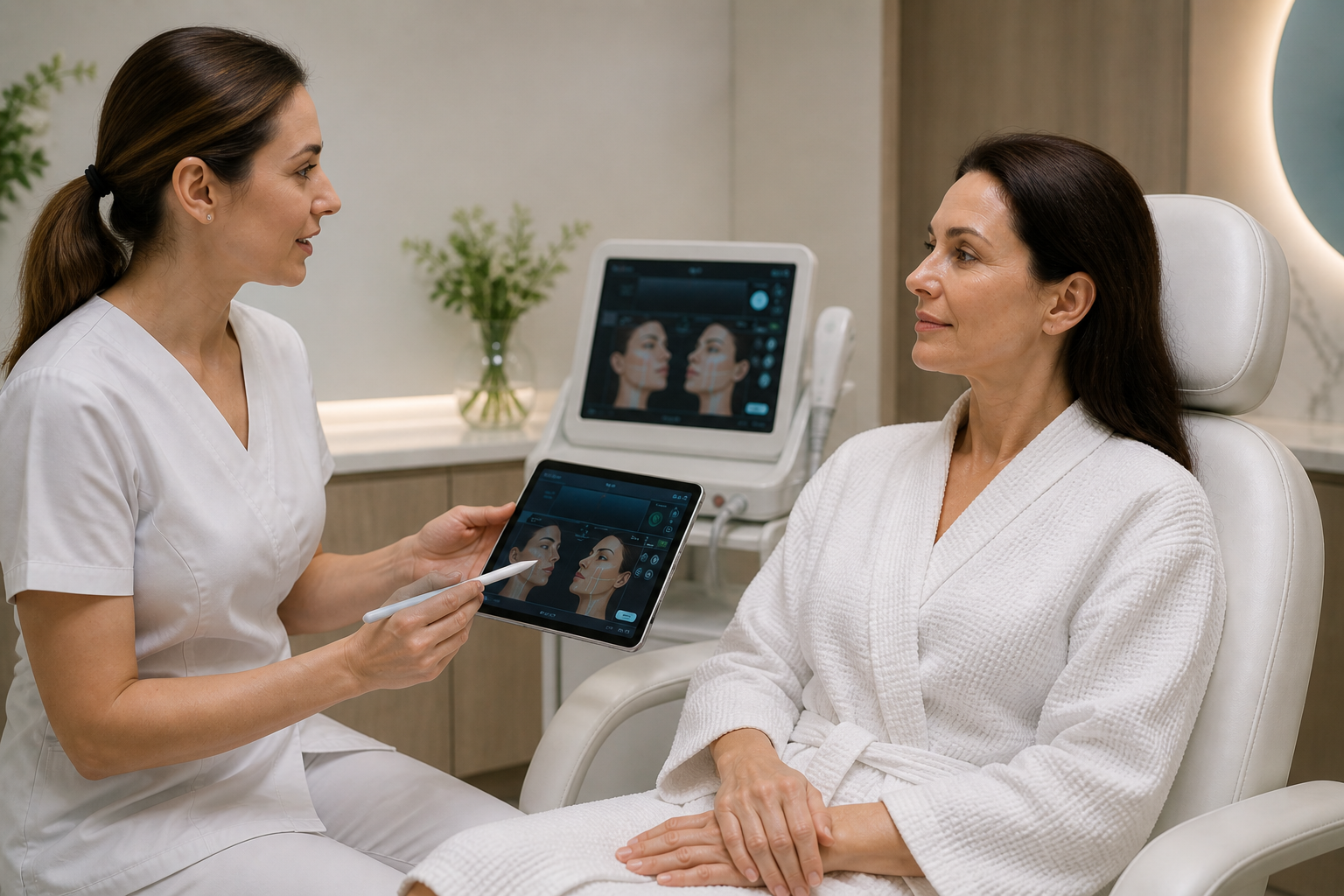
HIFU treatment has gained immense popularity, and one of the main reasons is the range of benefits it provides compared with other options.
There are no incisions, no needles and you will not need general anaesthesia. A handheld device transmits the ultrasound energy through the surface of the skin. This removes all the surgical risks such as infection, scars and adverse anaesthesia reactions.
You get up after the HIFU session and carry on with your day. There is no recovery time, no bandaging and no restriction on physical activities. Some people have a session during lunch hour and go straight back to work. This is a marked difference compared to a surgical facelift which can require two to three weeks of recovery.
HIFU activates your body to heal itself rather than adding any foreign substances to it. The new collagen produced is your own. It is neither synthetic nor injected but naturally integrates into your existing skin structure.
Results can last anywhere from 6 months to 18 months. Effects generally last longer than many other non-surgical treatments. Many people enjoy the benefits from a single session for 12 months or more. Maintenance sessions can push those results out even further.
Unlike some laser treatments which can carry risks for darker skin tones, HIFU treatment works on all skin types and colours. The ultrasound energy passes right through the skin without impact on pigmentation, leaving it intact.
For many people, the results are impressive after a single session. Although some patients receive follow-up treatments to enhance or preserve their results, the fact that one session can make a noticeable difference is a significant benefit.
HIFU technology has a long history of application in the medical field. It is supported by clinical research for cosmetic use and has received regulatory approvals. This is not experimental technology. It is proven and trusted.
If you have undergone cosmetic procedures in the past and are beginning to see results diminish, HIFU can be useful as a way of extending those outcomes. It also works well alongside chemical peels, microneedling and some laser treatments.
Because HIFU works on deeper layers of skin rather than the surface, moderate sun exposure will not negate the effects of treatment. However, sun protection is always recommended for the overall health of skin.
Although the majority think of HIFU as a tool for combating signs of ageing, it also helps with general skin quality. Tighter pores, better texture and a healthier appearance can be achieved with long-term use — even younger patients taking it preventatively report these effects.

If you have been looking into non-surgical methods of lifting and tightening skin, you'll have seen that there are many options available. Here is an honest, straightforward look at how they compare.
A facelift under anaesthesia remains the gold standard for a dramatic and lasting effect. Surgical outcomes tend to last between five and ten years, or perhaps even longer. But surgery comes with serious considerations. There is significant cost, recovery time typically takes weeks if not months, and there are risks of complications. HIFU offers a much gentler option. The results are more subtle and shorter-lived, typically 6 to 18 months, but the procedure involves practically zero risk and the patient can be back to their routine immediately. In ideal candidates with mild to moderate skin laxity, HIFU can produce truly remarkable outcomes. In cases of significant sagging, surgery might still be suggested as a more suitable option.
Chemical peels exfoliate the surface layers of skin to trigger the growth of newer, less wrinkled skin underneath. They are effective for surface-related concerns such as uneven texture, pigmentation and fine lines. However, peels don't reach those deep structural layers. HIFU targets the dermis and SMAS layer for a lift and tightening effect. The two treatments actually complement each other well. A chemical peel smooths the outer layers while HIFU firms and lifts the foundation beneath.
Laser treatments range from ablative lasers that remove skin to non-ablative lasers that stimulate collagen without breaking the surface. Lasers are effective for scars, pigmentation and surface texture concerns. Some carry certain risks for darker skin tones and in some cases require weeks of downtime. HIFU works at an entirely different level. It does not affect the outer surface, so there is a lower chance of pigment problems and no peeling or crusting. For tightening and lifting specifically, HIFU often performs better than many laser options.
This comparison comes up frequently because Ultherapy is technically a form of HIFU. The underlying technology is identical — concentrated ultrasound energy aimed at the dermis. The most notable difference is that Ultherapy is a branded system with the ability to provide real-time ultrasound imaging, enabling practitioners to visualise where they are treating. This can allow for more accurate energy delivery, although sessions tend to be more expensive. Standard HIFU treatment, for many people, produces similar effects at a more accessible price point.
No treatment is universally appropriate for every person. It depends on your particular concerns, the state of your skin and how much downtime you can accommodate alongside realistic expectations. What HIFU offers is a safe middle ground between doing nothing and undergoing surgical intervention.
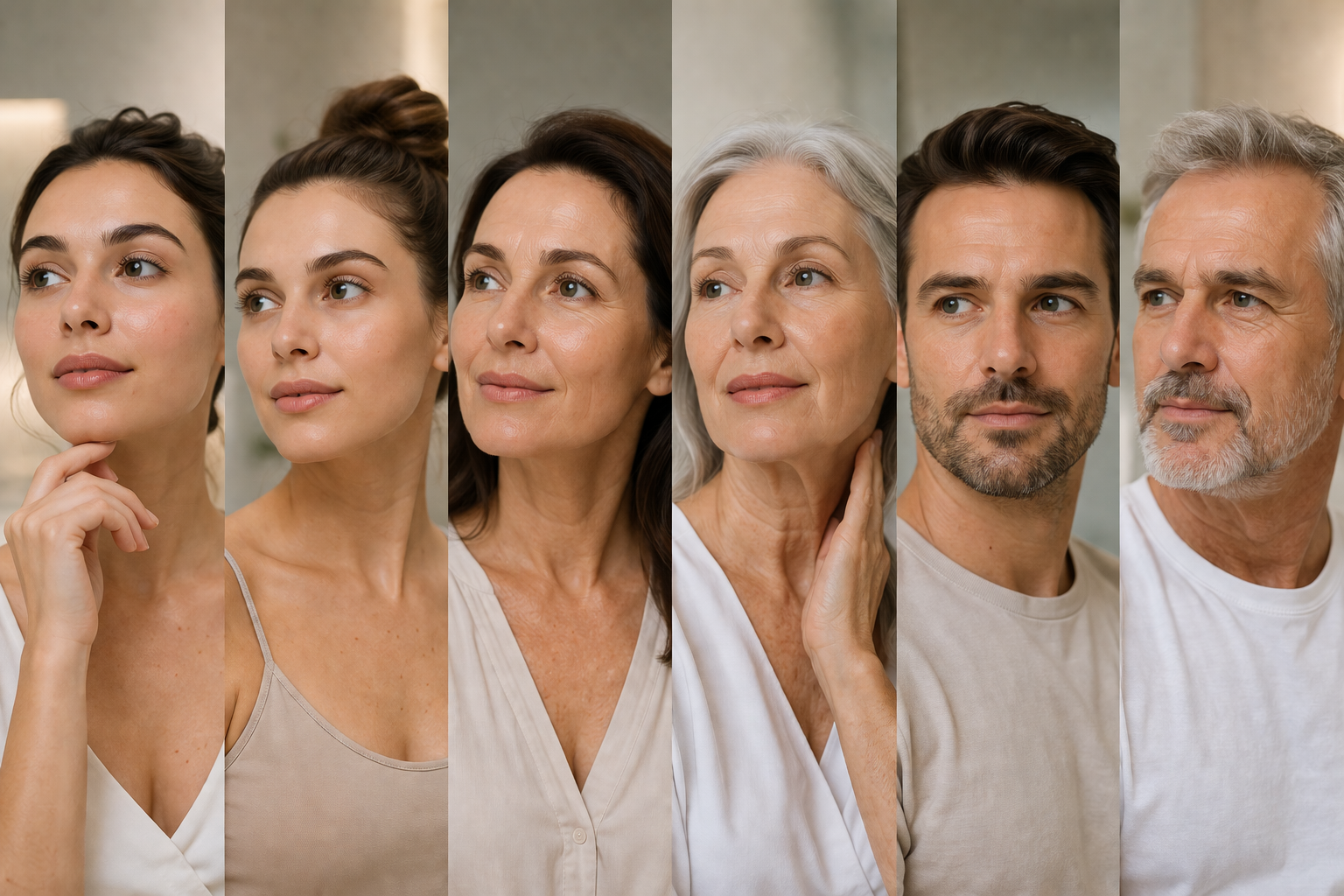
HIFU treatment is effective across a wide range of ages and skin types, though best results are generally seen within certain profiles.
More and more people in their twenties and thirties are turning to HIFU as a preventative measure. The signs of ageing are often minimal at this age, but collagen production has already begun to decrease. A HIFU session during this period is likely able to stimulate collagen production before any real loss occurs, providing your skin with a beneficial boost. Consider it maintenance rather than repair.
The best indications for HIFU are often found in patients in their forties. This is generally when signs of ageing start to become more noticeable. Fine lines settle in. The jawline starts to soften. The skin around the eyes and neck loses its tautness. Collagen levels have dropped noticeably. This is where HIFU comes in to help with tightening and lifting the areas that have begun to show their age.
HIFU is possible and potentially beneficial for people aged sixty and above, as long as expectations are realistic. Collagen formation has diminished considerably by this age and the level of skin looseness is typically more advanced. For those with mild to moderate laxity, HIFU can give real improvement in firmness, texture and tone. Most in this age group tend to use HIFU as a maintenance option, particularly if they have had surgical work previously and want their results to last.
Skin ageing does not discriminate. A growing number of men are looking for anti-ageing cosmetic treatments that avoid surgical methods. HIFU is especially valued by men, as it has no visible recovery time and the results are quite natural. There is no obvious sign that anything has been done.
This is the range where HIFU treatment is at its best. The procedure can work wonders for firmness in skin that has softened, drooped or lost definition, but before actual significant sagging has occurred. Ultrasound energy is most effective when there is still sufficient underlying structure to be tightened and lifted.
If you have had a facelift or other surgical procedure in the past and are starting to see the effects fade, HIFU can be a wonderful solution for maintaining those results. It promotes new collagen and firms up skin that may have started to relax again — without repeating the surgical process.
Honesty matters here. If you have excessive skin laxity, very severe sagginess and significant excess skin, HIFU alone will not provide the results you want. A surgical consultation might be more appropriate. Those with active skin infections in the treatment area, metallic implants near the treatment zone, or certain medical conditions should also seek the counsel of a qualified practitioner before proceeding.
The take-home message is that HIFU works best when there is something to tighten. It can firm and define skin that still has reasonable underlying structure, but no longer holds on as tightly as it once did.

Knowing what happens during a HIFU session removes much of the uncertainty. Here is an honest step-by-step guide.
You will consult with the practitioner, who will assess your skin, discuss your concerns and identify the locations you wish to target. They will check the thickness of your skin, its elasticity and the degree of laxity in each zone. This assessment determines the treatment plan — how many focal points will be treated, and which depth of ultrasound energy to use.
Your skin will be cleansed, and a thin layer of ultrasound gel applied. The gel allows the HIFU device to make proper contact with the skin and aids in the accurate transmission of ultrasound energy.
The practitioner places the HIFU handpiece against your skin and delivers concentrated bursts of ultrasound energy. Every pulse delivers energy to a particular point below the surface. You will experience a sensation commonly described as a warm prickling feeling. Some areas are more sensitive than others. The cheeks feel milder than the forehead and jaw. There is nothing that would be described as pain, but it can feel very intense in places. A lot of people find it totally bearable without numbing cream.
A targeted treatment to the chin or around the eye zone can take just 15 to 20 minutes. A full face treatment typically lasts around 45 to 60 minutes. A combined full face and neck session may last up to 90 minutes. Body treatments vary depending on whether the area is larger or smaller.
You may experience some mild redness, slight swelling or a warm, tingling sensation in the treated area directly after the session. These effects generally fade after a few hours. Most people only experience slight tenderness to the touch for one or two days, which is quite manageable.
There is genuinely no recovery period. There is no need to take time off work. You don't need to avoid social situations. You can apply makeup, you can go out in the sun with appropriate care, and you move on with your routine immediately.

Understanding when to expect results from HIFU will set your expectations and help you avoid disappointment.
Straight after treatment, some people detect a slight tightening. This is due to the inherent contraction of collagen fibres in response to thermal energy. The change is subtle, but some patients notice a difference before and after the session.
The body's healing response is alive and active. New collagen is being synthesised and existing collagen fibres begin remodelling. Initial skin tightening becomes evident, particularly in areas where laxity was most marked before treatment.
This is the phase where the cumulative effect truly shows. The complexion appears more taut, smoother and more toned. The jawline may seem more sculpted. Lines and folds soften. Overall, the texture appears to be more alive and healthy.
In most cases, the effects of a single HIFU session extend between six and eighteen months. Some report sustained improvement for up to two years. However, the natural ageing process does continue, so skin will age at its normal rate. That said, the collagen boost from HIFU provides a definite step forward.
Most people opt for a HIFU treatment annually or every 12 to 18 months to maintain the outcomes. Each session builds on the collagen created by the last, leading to a compounding effect over time.
The time between the procedure and the final result is influenced by age (younger skin tends to yield results faster since collagen production capacity is higher), the area treated, and overall health and lifestyle factors.
Lifestyle factors also matter. Sun exposure, smoking, poor diet and insufficient hydration can shorten the life of collagen and speed up its breakdown. Sun protection, a healthy diet and staying hydrated will all help you get the most out of your HIFU treatment.

Safety is always a concern with any cosmetic procedure, and HIFU treatment has a reassuringly good track record.
HIFU technology has been used in highly precise therapeutic applications of focused ultrasound in the medical field long before entering cosmetic clinics. Within cosmetics, HIFU has been validated through significant clinical trials and has received regulatory approval from various organisations, including some FDA approvals for applications such as eyebrow lifting and submental tissue tightening. It is proven technology with peer-reviewed science demonstrating its safety and efficacy.
Temporary side effects are normal and include mild reddening in the treated area, which usually resolves within a few hours. Some may experience slight swelling or puffiness, especially around the eyes or jawline area. A gentle tenderness to the touch for a day or so following treatment is also common. A slight tingling or warm feeling might last an hour or two after the session. These are all normal reactions to the ultrasound energy and resolve on their own.
Rare side effects include temporary numbness or a bruising sensation in sensitive areas. Small welts or lines on the surface have been reported occasionally. These typically resolve within days. When carried out by a skilled practitioner, serious complications are exceptionally uncommon.
HIFU is a process that delivers focused energy at varying depths. Incorrect settings or insufficient training can diminish efficacy and increase the risk of side effects. It is essential that your treatment is performed by an experienced, qualified professional with a thorough understanding of the technology and the anatomy involved.
Not all HIFU devices are created equal. Clinical-grade devices operated by established professionals are much more reliable than lower-cost alternatives. The type of equipment used directly translates to both safety and outcomes.
The sensation is more like a warm prickling than pain, according to most people. The face is not equally sensitive everywhere. While the discomfort is generally mild enough not to need numbing cream, some practitioners will have it available for patients who want that option.
Most people see improvement from just one session. However, some prefer additional sessions if they have more visible skin laxity. Typically, maintenance sessions are performed every 12 to 18 months to sustain benefits over the years.
HIFU can achieve impressive tightening and lifting of mild to moderate skin laxity, making surgery unnecessary for many people. Nevertheless, for significant sagging with a lot of loose skin, a surgical facelift will still provide more pronounced and longer-lasting effects. HIFU is best positioned as a non-surgical option for individuals who do not need or desire surgery.
Virtually none. You can continue with your daily routine right after the session. There are no restrictions on activity, makeup or sunlight (though sunscreen is always recommended). There may be some mild redness or tenderness for a few hours.
Results develop gradually over one to six months as your body regenerates new collagen, although you may notice a slight tightening effect right away. The most noticeable results often come to light around the three to six month mark.
Yes. Since the skin's surface is bypassed by HIFU energy, melanin does not absorb the energy the way it might with some lasers. It is suitable for all skin tones with no increased risk of pigmentation changes.
Absolutely. HIFU works well alongside chemical peels, microneedling, dermal fillers and some laser treatments. Many people combine treatments to address both surface-level and deep structural concerns. Your practitioner can help determine the ideal combination and timing for your goals.
HIFU delivers focused ultrasound energy at precise depths underneath the skin to create controlled micro-injuries. Your body responds by producing more collagen and elastin as a natural healing mechanism. The new collagen gradually firms and tightens the skin, counteracting the effects of diminishing natural collagen production that comes with ageing.
Yes, and that is one of its greatest strengths. The changes are slow and incremental since results build over weeks and months. There is no sudden, obvious change that draws attention. People often comment that you look well rested and fresh rather than noticeably treated.
Look for someone with hands-on training in HIFU treatment, familiarity with the device being used, and who provides a comprehensive consultation beforehand. An experienced practitioner should assess your skin honestly, manage your expectations and customise the treatment based on your individual needs. Do not hesitate to ask about their credentials and experience.

As a non-surgical approach to skin tightening, lifting and rejuvenation, HIFU treatment is one of the most capable treatments currently available. It is grounded in rigorous science, supported by extensive clinical experience and trusted by practitioners and patients throughout the UK and further afield.
Part of its appeal is its simplicity. No surgery. No needles. No downtime. It is non-invasive ultrasound energy, guided with precision, working with your body's own biology to produce real, visible outcomes. Whether the concern is a softening jawline, drooping brows, a loose neck, or areas of the body that could benefit from firming, HIFU treatment offers a safe and effective path forward.
Just as with any cosmetic treatment, everything comes down to being realistic and having the right practitioner. HIFU is not a time machine and cannot replicate the effects of surgery for those who truly need it. But for the majority of people with mild to moderate skin laxity, it provides natural-looking, comfortable and lasting results.
Your skin tells a story. HIFU treatment simply helps ensure that it's a good one.